Tuesday, April 5, 2016

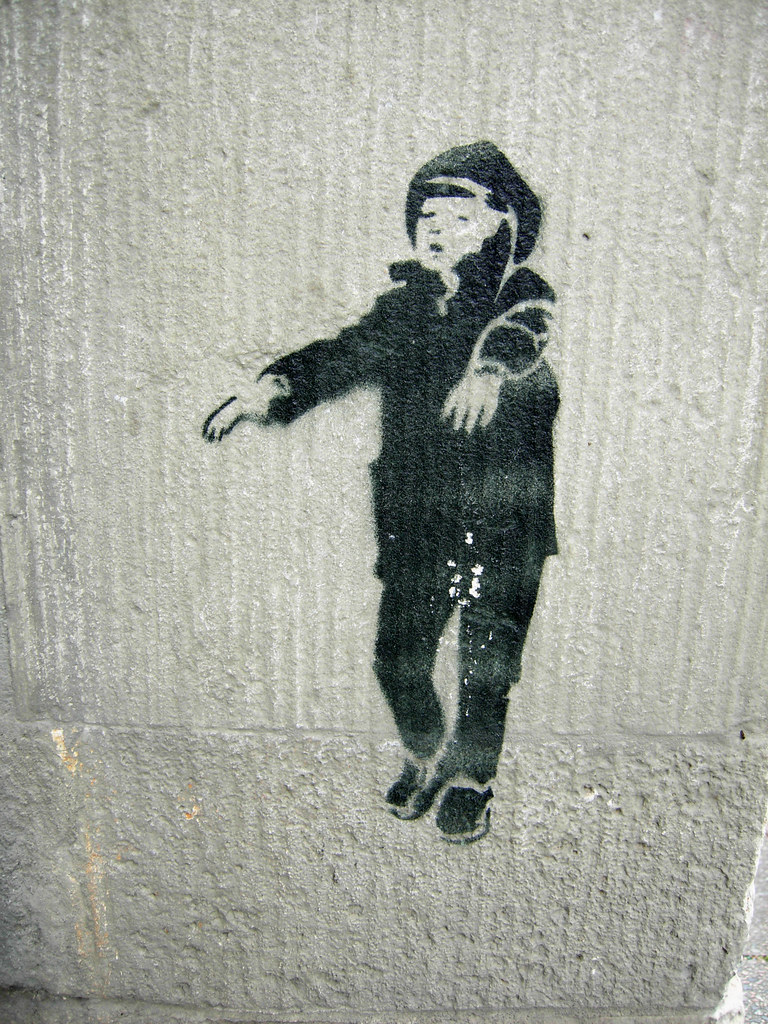
The Sleepwalkers


Black children don't deserve to be protected by police, they deserve to be shot by both officers and vigilantes because their appearance is one we associate with violence. Mexican mothers don't deserve sanctuary from the violence brought on by America's bogus Drug War--they deserve to be separated from their children. Muslim families don't deserve access to the same safe shores that received our great- and great great-grandparents. The safety and comfort of white people is more important than the very survival of others.

How do these kinds of heinous beliefs flourish among a population which declares itself to follow the precepts "love thine enemy as thyself, turn the other cheek, even as ye have done unto the least of these, ye have done unto me?"


The collective obliviousness of white people is a product of many things; a system of K-12 education which portrays all events in history through a "white equals right" lens, the media's misrepresentation of people of color as more dangerous and likely to commit crimes than white people, behind-closed-doors government policies of housing, loan, employment, and policing which herd people of color into ghettos and jails.

It's super lame that it's taken white people so long to wake up to all of this. It is very, very lame that they don't realize all by themselves that all of the articulate, big-hearted, intelligent POC's they know are emissaries from, not exceptions to, their cultural background. It is very, very lame that they allowed themselves to be convinced that the achievement gap had more to do with white culture being extra awesome and other cultures not so much, rather than do the small amount of research it takes to discover the actual causes of disparity. It is utterly, utterly lame that when white people look at the suffering of a person of color vs. a white person, they have a whole different set of standards for what they consider "the way things are" vs. what they find infuriating and unjust.

White people are beginning to wake up now. Voices of color are beginning to hold equal and in many cases superior sway (as should be the case when they speak about issues they are more familiar with than white people). Thanks to the increasing maturity of the internet, the collective debate is reaching a point of equilibrium. The intellectual elite is near unanimous in its intolerance of white ignorance, and we are beginning to experience the classic conundrum of revolutions: once the people who have been on the bottom get to the top, they have every incentive to recreate the cycle of oppression by humiliating and taking out vengeance upon their oppressors.

Only this time, it's not just the former oppressed perpetuating this cycle. It's also guilty former oppressors, seeking to exempt themselves from retribution, real or imagined. From ivory towers, the elite rain down righteous condemnation on poor white America, the brunt of our collective frustration towards ignorance, racism, exploitative policies, etc. finding an easy target in these dregs of the country. What is wrong with them? Why can't they seem to shake the spell of their racist pied pipers and join the ranks of smart, compassionate, worthy, non-racist human beings?

As someone who grew up with a keen sense of the economic injustices perpetrated against the population at large, I can tell you that it's an uphill battle not to be ignorant and white in a conservative state--a battle you don't properly realize you're even fighting; a battle you constantly get the uneasy sense that you're losing. You feel vaguely uncomfortable about the seemingly obvious superiority of your culture over others. Whenever you're in the company of people of color, you can tell they find you ignorant. You can tell they're angry. You can tell you're always saying the wrong thing, but you can never quite figure out just what it was you did. Maybe you're not always graceful about the fact that whites are superior, but what are you supposed to about it?

When I took a domestic diversity class and began to deconstruct "white equals right," one thing that struck me was how often my classmates insisted that most white people were *choosing* their ignorance. Their insistence that white people were *choosing* to capitalize on their advantages, knowingly and gladly at the expense of people of color.

Understandable...but problematic.

It takes a lot of humility and patience to undo a lifetime of conditioning. Frequently I was frustrated, frequently I felt myself reverting to my trained, automatic (and thus, easier) way of seeing the world. I want to believe, but I can't say for sure that I would have followed through with changing my views had I not benefitted from a patient, invested, and wise teacher helping me along the way. The way you feel you're being treated now might be a good way to understand how students of color feel in most other arenas besides this classroom, she suggested. Awesome advice, which I took. There is a certain amount of reckoning to be expected, some of which can be turned to the advantage of revolutionary work.


Imagine waking up and finding out you've been sleep-wreaking carnage on people around you the whole time you were asleep. Imagine you are confused but horrified, and you want to make it right, but they don't seem to want your help. "You've done enough here," they say.

There are many, many other sleepwalkers. You think you might have some understanding of them. There is still a great deal of carnage being wreaked, and it seems to you that it should be a first item of business, figuring out ways to wake the sleepwalkers so they'll stop hurting people and start helping in general.

"Of course you would focus on the sleepwalkers," you're told. "Just like a sleepwalker. So egocentric."

I understand now that my Irish ancestors threw their black friends under the bus in order to be white. I know it's an old story and that most people who share my skin color have ancestors who were willing to let someone else occupy the bottom rung of society just so that they wouldn't have to. I understand now that Nixon and his advisers singled out people of color for a lot of suffering that I got to avoid. Does either of those things mean that I am by nature belligerent, hateful, and willing to take my pleasure at the expense of others? 

I'm a new-ish human. Nobody told me about those things at birth. They were disguised from me along the way. Now that I have a better sense of history, I interact with the world differently. I do everything within my power to counteract these systems, as I would expect any compassionate person to. Who does it benefit to insist that it is not the business of anti-racist activists to figure out ways to awaken the sleepwalkers? Who does it benefit to insist that they actively choose sleep and carnage?


As long there are people we can point to and say "this class of person is not worth attempting to understand, collaborate with, or love" we will be easy to control. This doesn't just go for the racists; it goes for the people who have the capacity to understand and help them but instead choose to mock and condemn. Fully acknowledging that some people very understandably don't have that will or capacity.

The problems we face collectively here on Earth don't come down to race or class or gender. Privilege magnifies things--less privilege means you suffer harder, more privilege means you can exploit on a broader scale--but the essential problems, likewise the solutions, are not the province of any one group of people. Those who are attuned to our common survival are going to behave in ways that reflect that; those who are concerned only with their own survival are going to reflect that in their behavior. They're going to try to exploit everything they come across to their own ends. There are people at every level who feel left out in the cold by the rest of us, and there are reasons for them feeling that way, and there are things we can do about it.

"White is wrong" culture is scaffolding to help us build a better world. It's not a permanent fixture of that world. America has been tuned in to the "white is right" channel for a crazy long time so we need a healthy dose of the opposite just to upset the default position. It's good to remember, though, that the exploiters benefit from both "white is right" culture and "white is wrong culture" inasmuch as they both keep us divided. Both discourage us from understanding or communicating with each other. Both turn actual human beings into unrecognizable caricatures perfect for reinforcing our worst ideas about one another.


One of the things we can start doing is making a clearer distinction between our condemnation of the people who actively create and maintain systems of privilege and the people who passively benefit from them. Poor white people are deluded into thinking they're in the same boat as the exploitative classes just by virtue of their skin color. We can stop feeding that delusion by acting as though all white people are oppressors by default.

The "Olympics of Oppression" is a well known concept within the anti-racist community. The general takeaway is "pain is pain, stop trying to assert that you have it worse than others and start trying to make things better for yourself and others." Does it make sense to draw a firm distinction between the suffering of people of color and the suffering of exploited whites in the work of liberation? Our oppression may be different in both degree and kind,  but we all have a common enemy: exploitation at the expense of community.

Now a lot of people are making a lot of noise about how stupid Trump supporters are, which only feeds into everything they're told about a liberal elite that gets off on feeling superior to others but doesn't actual have any moral meat to it. Alternately, there are some people offering hugs at Trump rallies. Sometimes we just don't have a hug in us for someone who has made our lives miserable. I get that. But hugging is greater than scorning. Internet culture will be truly grown up when our collective rhetoric shifts from a call-out to a call-to-duty model, where instead of ridiculing each other's worst selves, we remind one another to keep rising to our best selves.


I'm not saying that it's a negative thing for much work of liberation to focus on people of color exclusively. That's both positive and necessary. I'm not suggesting that all those who have a grudge against white people should just get over it. That's ridiculous and reductive. I'm saying that the tone of the collective conversation needs to change if we're ever going to get anywhere collectively. I'm saying that if we're tired of oppression, we should pay close attention to what feeds into it, and what interrupts it. 

Right now there's a great, miserable barrier of people who have been born and bred into ignorance. Those who hold the truth are the only ones capable of banishing lies. And it is disrespectful to the humanity in all of us to assume that anyone would choose to live a lie that hurts others if they were able, by themselves, to come to understand it for what it is.

Saturday, March 19, 2016

A More Perfect Union


This Mess We're In


You hear about opinions people in your party are supposed to have. Occasionally you come across someone who actually believes it. Some liberals think that you shouldn't have babies unless you can afford to take care of them--most liberals see that as cynical classism. Some conservatives think it's a good idea to make poor kids do janitor duty in their own elementary schools. Most conservatives recognize that if the senator really thought it would be so good for children to scrub toilets at their own school, he should start with his own children's schools.


Most of us are more compassionate, thoughtful, and willing to hear one another out than the people who represent us in the media and in office. Or at least, we started out that way. We used to take it for granted that our neighbors to our right and left care about this country as much as we do and desire largely similar outcomes for it even if we have differing views about how to get there. Don't we all want jobs that allow us to take care of ourselves and our families and preserve some level of dignity? Don't we all want a thriving middle class and a government that stays out of people's business unless explicitly invited?


In a functional society, we would spend the majority of our time coexisting peacefully in the vast territory of our common ground, and only venture into the tiny fraction of disputed territories when we're ready to engage with one another respectfully and thoughtfully, listen to and address one another's concerns, and refuse to consider solutions that leave even one person out in the cold. This is the only way good compromises can be reached.


But we never see this kind of discussion on tv. We only see entertainment-oriented ideological death matches. We've learned from this that compromise is impossible; that the only reason to enter disputed territory is to watch the other guy get pummeled, to crow when our guy gains a victory, to reassure ourselves that we are better, smarter, more right, more righteous. And so we have resigned ourselves, as a country, to the goals of our politicians: not to make life better for everyone, altogether; but to beat the other guy. To win.


Meanwhile, what's happening to our common ground? It's being systematically pillaged. All of the things we care about are being destroyed. We are all, together, getting worse, and worse, and worse off than we were before.


Bernie vs. Hilary. Trump vs. Cruz. Half of the country vs. the other half. If your guy wins, I'll move. If your gal wins, our country is going down the drain. If your guy wins, it proves the majority of the U.S. is depraved. If your guy wins, it proves most people are stupid. You really believe that? You're a sheep! No, you're a sheep! No, you people are sheep! No, you people are sheep!


Baaa! Baaa! Baaa!


What It All Boils Down To


Pundits tell us that being liberal means choosing an intelligent, grounded, socially conscious view of the world over a superstitious, proudly ignorant follower mentality. They tell us that being conservative means living a virtuous, disciplined life of service to others rather than succumbing to a lazy, amoral lifestyle based on taking pleasure at the expense of others.


Anyone with friends or family on both sides of the divide can see that it's not that simple. They know smart, grounded, socially conscious conservatives. They have liberal friends who believe in things without any scientific evidence, who say a lot of things they've never thought about for themselves, who are extremely proud of their ignorance of certain things. They know virtuous, disciplined liberals, leading a life of service to others. They know conservatives who spend most of their energy seeking to work as little as possible, dodge any moral consequences for their actions, and get as much as possible from others while giving as little as they can.


Neither set of traits, positive or negative, is exclusive to either party, but the pundits are very effective at working our biases about our own strengths and our biases about one another's weaknesses in such a way as to blind us to our commonalities (i.e. convincing us that liberals champion unions for substantially different reasons than conservatives champion stricter international trade laws; or that conservative reluctance to additionally tax or regulate businesses comes from a substantially different place than liberals' obsession with patronizing local operations and fighting big corporations; or that the conservative desire to allow private business owners to decide who to serve and why isn't remotely analogous to the liberal insistence that family planning is the business of families, their health providers, and their spiritual leaders).


It's not as simple as the Right Ones vs. the Wrong Ones, no matter who you are. On some level we all know this. But righteous wrath feels so...righteous. And whether or not we're making any headway, it feels good to take a stand for what we believe in and to strike out against that which we oppose. Confirmation bias ensures that we get more and more convinced of our superiority the more we hear about our side vs. their side. And the more partisan we get, the more tribal we get, the less we listen to one another, the more willing we are to think of one another as The Enemy Of All That Is Good instead of My Neighbor, With Whom I Disagree.


What Liberals Need to Understand


It's not stupid to believe in intelligent design. Contrary to popular belief, scientific evidence is not on the side of people who want to interpret everything as pure, random math. The more we understand the universe, the less probable we find it that matter just happened to organize itself this way. Random chaos, as far as we observe it, doesn’t properly allow for such a happenstance. It would be akin to just happening to stumble across the one chimpanzee out of the infinite who managed to accidentally jab out, not just a cohesive string of letters, but an entire Shakespearean play. It's no more statistically likely that we're just an elegant twist of chaos than that we're presided over by any one of the specific gods humans have believed in over the ages.


In other words, materialism is not the superior objective stance. A refusal to acknowledge any other world except the material one requires faith. Same as any other belief system.


What Conservatives Need to Understand


We each see events and incidents in our lives through a slightly different lens. When a pattern occurs, or some random, slightly unusual string of events leads us to the solution to a problem we’ve been struggling with, or has some kind of personal significance, some of us write it off as random coincidence. Some people see the external as a reflection of the internal, and interpret of the information they receive as some kind of lesson about their lives. By nature, the things that bring people to a belief in a higher power (intuition/spiritual impressions, personally significant signs or messages in the physical world, increased peace of mind or happiness as a result of spiritual alignment) do not translate well into the realm of common experience. If you believe in god, that's by design. A relationship with god is, by definition, intensely personal, a matter of the private sphere (rather than the public), and subject to verification only by each individual against their own experience.


In other words, the very nature of the holy denies anyone the right to claim a superior moral stance. The only evidence you can offer of your commitment to virtue is your actions towards others. Same as any other human, regardless of their personal beliefs.


What We All Need to Understand


Regardless of what we believe, each of us is dwelling inside of our own subjective world. Each of us finds our personal world more compelling, aligned with truth, comfortable, and/or survival-oriented than all others (when we start to find another world more compelling, we find ourselves drawn to enter it).


Some of us are comfortable entering other subjective worlds, trying them on for size (what do you believe, and why? What implications would that have for my behavior and worldview, if I believed the same? Does this feel true to me?)  and then returning to our own. Some of us feel safer remaining firmly in our own subjective world (I am steadfast in my beliefs. This is my truth. I would rather not expose myself to being confused and led astray by the half-truths of your worldview).


Regardless of which camp we fall into, we can't expect the opposite camp to either completely change their ways, or to accommodate us all of the time. I may be willing to enter your worldview in order to understand your actions or have a good conversation with you. That doesn't mean I'm willing to live in it permanently, just to suit you, and it doesn't mean that I secretly know that you're right and I'm wrong.


Conversely, just because I'm comfortable entering your territory, it doesn't mean that I should demand that you be willing to enter mine. I already know that you're not comfortable with that. It's not fair of me to expect it.


This can be a problem, though. When we all remain in our subjective worlds, we can talk to one another as much as we want but nobody listens. Even knowing that the standards of our own worldview aren’t an appropriate measure for the actions and beliefs of others, when we converse about values from our separate camps, we tend to spend the majority of our time asserting and defending our own value system, rather than trying to understand and negotiate one another’s value systems.


The Third Space


There is a need for a third space, a neutral space where everyone’s personal values, priorities, and beliefs are off the table argument-wise, and the only thing being discussed is how we can accomplish the things we’re setting out to accomplish without ignoring or violating things that are important to one another.


Our entire system of governance right now is based on an increasingly vitriolic feud. (Feudalism might be a good name for it.) My party vs. yours. My value system vs yours. Intense allegiance, not to the common cause, not to a more perfect union, but to our own personal causes. So that when our leaders get into office, instead of collaborating to serve us, they dig trenches and settle in to obstruct one another. Does this seem like a rational or efficient way of getting absolutely anything done?

Well, it is effective at one thing. It’s been very effective at distracting us from all of the terrible things that have been going on behind our backs: the privatization of prisons and militarization of police, the migration of American jobs overseas, the gradual concentration of all the wealth we’ve collectively earned through our record productivity into the hands of very few, the so-called “spreading of democracy” around the world by supporting military coups which replace democratically elected leaders with dictators more willing to allow the U.S. cheap access to their country’s resources at the expense of their own populace, and the dangerous enemies now rising up against us as a result of these bad policies.

We have two choices. We can keep pointing fingers at one another, blaming each other's values, political philosophies, and blind trust in leadership for how bad things keep getting. Or we can recognize that we're all obstructing a functional democracy through our very antagonism, and turn our efforts on an individual level towards peace and understanding. Resist the urge to demonize. Resist the urge to mock and belittle and denigrate. Stop playing into the hands of the people who benefit from our enmity.

Friday, January 22, 2016

Let's Venn-Diagram our Utopias

Neither conservatives nor liberals are happy with the current state of affairs. We have in common the desire for a better, safer, kinder world. The differences of opinion aren't about whether the world should get better. They're slight differences of what a better world looks like, neither of which is remotely antagonistic to the other side's worldview.

One group believes that our social and political structures can and should reflect the values we hold individually in terms of looking out for one another, helping those in need, and expressing gratitude for what we have by showing generosity towards those with less.

The other believes that individuals aren't living up to the moral guidance and order our current societal structures offer, and that only by reinforcing certain kinds of self-denial and self-discipline can a society help its individuals reach their personal moral potential, thereby creating a moral society.

So you can see that we're focusing on different aspects of paradise here: on the one hand, we're daydreaming about a world in which everyone is more patient, generous, and loving towards one another; on the other side, they're daydreaming about everyone working hard, contributing to their communities, and coming to enjoy the benefits of self-reliance, self-discipline, and tangibly benefiting the people you love.

They're both worthy visions, and depending on how we get there, they're not even slightly incompatible.

We need to stop attacking each other over our various differences of opinion (granted, there are many) and start focusing on the aspect's of one another's visions that we can get on board with. Instead of attempting to destroy one another's strongholds of moral opinion, we could seek truces. Instead of finding reasons to oppose one another, we could join together to build towards both visions of paradise, and together create something that would more closely resemble everyone's ideals.

True, neither will be quite perfect, both will require adjustment and compromise, but I'm willing to bet the finished product of that concerted effort would be a damn sight better than what we have now.

Wednesday, November 18, 2015

Sex Ed, Abstinence, and Abortion

Nobody wants abortion to be women's primary means of preventing pregnancy. And most of the people who are against sex education are worried that their priorities will not be part of the sex-ed agenda. As such, why don't we develop a national sex education program with three primary tenets:

1) Sex as a big, adult decision which involves consequences and emotions that can be difficult to handle, regardless of your maturity level. It is your decision to make and no-one else's, and you should decide to have sex only if you feel completely, totally ready and comfortable. Your friends' opinions should not be a factor. Your partner's desires are less important than your personal comfort. Television, magazines, books, bragging friends, etc. can all contribute to make it seem like the sooner you have sex, the cooler you are. Not so. Ask any adult. The more of a conscious decision it was, the less influenced by outside opinions, the happier they were with their first experience. Nobody should feel bad about choosing to remain abstinent, and it's nobody else's business what you choose. Abstinence is an excellent way to make sure that you won't have to deal with certain issues until you're good and ready.

2) There is a huge contingent in this country that seeks to make abortion entirely illegal. We don't know exactly at what point consciousness enters a body, whether it is an embryo, a zygote, a fetus. We have no way of knowing. Some people want to draw a hard line immediately after conception, that's how worried they are about messing this up. Historically, making abortion completely illegal leads to women seeking unsafe abortions. As the majority of us would prefer that neither women nor children are hurt or threatened, we urge you to take this issue very seriously and do everything you can to prevent a pregnancy from taking place, thus ensuring that you will never have to toe the line of potentially ending a prenatal consciousness.

3) Here are some time-tested ways to keep yourself healthy, clean, and safe, physically, emotionally, and psychologically, whatever you do decide for yourself.

Instead of laughing off the concerns of the anti-sex-ed people, why don't we incorporate their desires into our agenda so that we all have equal stake in this?

Sunday, October 11, 2015

"We've Got Plans, Big Plans! We're Gonna Change the World"


"If you are judging them while they are judging you
And you think that makes them assholes, maybe you're an asshole too
Do we argue with each other until we both turn blue or
Find similarities in what we like and what we do?"


Kimya Dawson is hella worth listening to. This whole album is fantastic.


Wednesday, October 7, 2015

Burning Man and the Default World

What's the deal with Burning Man? What motivates so many people to give so much time, money, and energy for the opportunity to suffer through ten days in a harsh environment? After its first year, attendance quadrupled from 20 to 80. Within a space of ten years it grew to 2,000. Less than five years later, it was up to 20,000. These days 60-70,000 people gather in the desert once a year for the 30 year old festival.

If you've been around Burners or done any research on the event you've probably come across the term "Default World," used to describe the general, non-Burning-Man-world of commerce, communities, and human relations. The term may sound strange or cultish at first, but it illuminates a way of seeing the world which holds vast potential for positive change.

The sort of patchwork, conventional wisdom, the unspoken story of the world, goes something like this: if the powerful forces of nature, god, markets, social Darwinism, and brute competition couldn't overcome the individual sins of greed, dishonesty, and hatred, nothing can. It springs from a deeply inconsistent and self-contradictory mishmash of Puritanism, evolutionary theory, fatalism, and the old "might equals right" paradigm, and falls apart under the slightest scrutiny, yet I would venture to say that a majority of the world holds this view subconsciously. By default, if you will.

Here's why Burning Man caught on like wildfire: it's all in the design. By setting clear and strategic expectations for participants, a new generation of event organizers is finding ways to facilitate more loving, authentic, and fearless interactions between strangers. These intentional communities offer both a critique and an alternative to the previously described "this is the best it gets" view of the world. 

We've learned a lot about power structures, human nature, and love from the vast array of mistakes, evils, and various forms of manipulation people have exercised over one another over the centuries. It stands to reason that this knowledge would enable us to keep abreast of the more threatening aspects of human nature.

Here are the expectations at Burning Man, the roots of the culture:


Radical Inclusion
Anyone may be a part of Burning Man. We welcome and respect the stranger. No prerequisites exist for participation in our community.


Gifting
Burning Man is devoted to acts of gift giving. The value of a gift is unconditional. Gifting does not contemplate a return or an exchange for something of equal value.


Decommodification
In order to preserve the spirit of gifting, our community seeks to create social environments that are unmediated by commercial sponsorships, transactions, or advertising. We stand ready to protect our culture from such exploitation. We resist the substitution of consumption for participatory experience.


Radical Self-reliance
Burning Man encourages the individual to discover, exercise and rely on his or her inner resources.


Radical Self-expression
Radical self-expression arises from the unique gifts of the individual. No one other than the individual or a collaborating group can determine its content. It is offered as a gift to others. In this spirit, the giver should respect the rights and liberties of the recipient.

Communal Effort
Our community values creative cooperation and collaboration. We strive to produce, promote and protect social networks, public spaces, works of art, and methods of communication that support such interaction.


Civic Responsibility
We value civil society. Community members who organize events should assume responsibility for public welfare and endeavor to communicate civic responsibilities to participants. They must also assume responsibility for conducting events in accordance with local, state and federal laws.


Leaving No Trace
Our community respects the environment. We are committed to leaving no physical trace of our activities wherever we gather. We clean up after ourselves and endeavor, whenever possible, to leave such places in a better state than when we found them.


Participation
Our community is committed to a radically participatory ethic. We believe that transformative change, whether in the individual or in society, can occur only through the medium of deeply personal participation. We achieve being through doing. Everyone is invited to work. Everyone is invited to play. We make the world real through actions that open the heart.


Immediacy
Immediate experience is, in many ways, the most important touchstone of value in our culture. We seek to overcome barriers that stand between us and a recognition of our inner selves, the reality of those around us, participation in society, and contact with a natural world exceeding human powers. No idea can substitute for this experience.


Each of the principles is designed to facilitate the pursuit of happiness as much as possible for as many people as possible. Dissolving hierarchies, discouraging cliquishness, setting the expectation of being fully present with one another, taking accountability for our own behavior, interacting respectfully with ourselves and our environment--these preclude many of the most negative aspects of society, pre-empting the need for a punitive attitude towards wrongdoers. Why is Burning Man so popular? Because it WORKS.


People treat each other with more trust and goodwill, feel safe being more open and honest versions of themselves, feel safe pushing back against the limitations they've internalized or accepted over the course of their lives. They make themselves vulnerable to others and to truth, stepping up to face their own excuses and shortcomings and discovering new things about themselves. People change their lives after coming to Burning Man. They change the way they do business. They change the way they interact with their families. It's healing, transformative, and it all communicates something very, very different than the default world's message about human nature and what humans are capable of.

Burning Man is fertile ground to examine the question of individual morality vis-a-vis civilized society in terms of creating a bright and loving world vs. a dark and hateful one, because so-called "vice laws" are effectively (if not officially) suspended at the festival. Nudity, anarchy, drug use, and sexual openness, often portrayed as the most dangerous threats to society, are all highly prevalent (though also largely possible to avoid) in Black Rock City. The crime statistics during the event, even when compared to other festivals (let alone cities of comparable size) contradict the idea that these sorts of activities go hand-in-hand with actual, physical threats to human beings. As for anecdotal evidence of the level of joy, harmony and peace experienced by attendees, here are some pictures of people at the event. (Pay attention especially to the close-ups of faces. Feel free to seek out your own as well).

In theory, people of every persuasion are welcome to come and see what kind of world these festivals could create, but that doesn't happen in practice, which brings up another interesting point. Self-ostracization is the only kind that takes place at Burning Man, and self-ostracization from intentional communities tells us important things about the obstacles to utopia (and peaceful, harmonious society in general). There are two types of people who don't find a welcome for themselves at these kinds of festivals.

The first, who certainly attend but may not encounter such a welcoming spirit, are those determined to behave in whatever manner they see fit, with no regard to the experience of others. Aggressive solipsists, people who imagine themselves to be the only, or most important being in the universe and think it's a good shortcut to spend their energy avoiding the consequences of disharmonious behavior rather than learning harmony.  These are the most obvious threat to both the concept and execution of a utopian society, but luckily they are few and far between, and natural consequences are constantly inspiring to reform them. Even people who can manage to live this way due to their influence or affluence pay the heavy price of being tolerated rather than loved, since meaningful, intimate relationships are impossible to maintain without some level of personal accountability.

The second group, an unfortunately large and thriving subgroup of the former, and unfortunately unlikely to ever attend Burning Man at least, comes in the form of people who consider it a virtue to eliminate all sanctuary for contradictory views on morality, spirituality, and self-expression. Moving well beyond the realm of defending their personal safety and well-being, they demand that their entire horizon be consistent with their ideas of how the world should be. They see nothing inconsistent with demanding freedom of expression and worship even as they sacrifice their opponents'  chosen forms of expression on the altar of their own personal ideals, in the name of their own personal gods. 

Our default, half-formed, internally inconsistent world of collective morality fully supports this insane idea--that a particular group of humans, based on nothing other than conviction, should be able to impose their idiosyncratic set of behavioral restrictions on their ideological opponents, divorced from any evidence that this leads to less conflict rather than more conflict; as though the fact that we believe different things is the root of all irreconcilable conflict, rather than this basic, unapologetic disrespect for the agency of others.

The truth is, people like this would do well to spend some time in a space like Burning Man, if only they could be convinced. Plenty of attendees hold contradictory beliefs when it comes to being naked in public, the benefit vs. harm of drug usage, the existence and shape and will of God(ess)(e)(s), the benefit vs. harm of guns, the appeal vs. not of certain styles/outfits/lifestyles/modes of being/diets, etc. Very few of these people engage in destructive conflict with one another over these things while at Burning Man. Everyone accepts. Everyone loves. Everyone listens. Everyone connects. Everyone is completely free to be themselves, and it becomes crystal clear that we have nothing to fear from one another's differences.

In the default world, oppositional perspectives inspire distance, guardedness, and often personal animosity. All of this makes us miss out on the beauty of other people, the love they have to offer, and the kinds of wisdom built up around lifestyles that are different than ours. We have so much to offer one another, and particularly those who think about the world very differently than we do. At Burning Man, with barriers lowered, we have unique access to truths about others, humanity, and ourselves, and we gain access to a deep and universal sense of community, we immerse ourselves in the vast love that connects us all as human beings and living things.

Burning Man can feel a bit cultish, from the evangelism of Burners to the phrase "Welcome Home!" you hear everywhere you go, particularly during your first year. If it is a cult, I think we've finally learned how to cult right: full inclusion and acceptance of every damned aspect of our fellow human beings outside of violence, commerce, or manipulative behaviors. 

The festival may be unsustainable in practical terms, but the culture of camaraderie is far more emotionally sustainable than anything I've encountered. Each new year I attend, I wonder how I've survived an entire year in the default world, where you're nearly forced to adopt a wary stance and/or guard your intentions from the people you encounter, where attempts at emotional honesty and intimacy can be met with a range of responses other than reciprocation, from discomfort to fear to disdain. I, for one, believe we could create a whole city around this lifestyle, and the sooner, the better.

Saturday, August 8, 2015

Divided : Conquered

(Notes on My Traitor Ancestors)

Being an ally to people of color is not about being ashamed of your Whiteness. But let's get real: I am ashamed of my ancestors.

My genetics are a melting pot of English, Irish, Scottish, German, Norwegian and probably some others I'm forgetting. French I think. But I'm more than half Irish, which makes my Irishness legal tender and the firmest foothold on my own ancestry I'm bound to get.

Now, you may know the relationship between the potato famine and the influx of Irish immigrants to the New World. What you may not know is that the British had a great deal to do with the terrible impact of the famine (don't feel bad; this is a fairly recent revelation in the land of peer-reviewed publications.) 

The nasty treatment of the Irish followed them to the New World, but they took a stand against it. They did. They fought hard to be recognized as fellow human beings who deserve to thrive in exchange for their efforts. It was a very noble enterprise, or it would have been if they hadn't claimed their liberation by redirecting the hatred to another oppressed group. In tandem with fighting for their own rights for dignity and an honest living, they fought against those same rights for the Blacks pouring into the cities looking for work. 

It worked. Like the Italians, like the Polish, the Irish melted quietly into the category of "white." Hooray.

Which means I got to come of age as an average ignorant white girl, with no real knowledge of Irish culture or history, no understanding of the politics that went into the current makeup of either the U.S. or Ireland, and no sense of community beyond the bullshit commodity patriotism of self-serving politicians and mayonnaise commercials.

I'm not the only culturally whitewashed suburban kid who felt jealous of people of color for the sense of community and heritage we perceived them to possess. My education and socialization kept me ignorant enough of the actual experience of being non-white that when people looked at my dark olive skin in the summer and guessed at my heritage I was tempted to claim someone else's. Yes, I am Pacific Islander. Yes, I am one-eighth black. Yes, I am Native American.

I've since gained a better understanding of the socio-political, heavily institutionalized race complex in this country, mostly through dumb luck and partly through pursuit. I no longer feel uncomfortable about what incarceration statistics, poverty statistics, and media portrayal of people of color seem to indicate about the superiority of my cultural and/or genetic heritage, because I know exactly how the Rube-Goldberg tube of the Benevolent White Conqueror works. Under scrutiny our dominant narrative reveals itself to be a nightmare version of the fairy tale in which the Wolves emerge not only alive and well but revered for their cleverness, cunning, and strength against weak and unworthy adversaries such as grandmothers, piglets, and little girls.

If you trust the mainstream news (owned in conglomerate by the most powerful men in the world) to give you an accurate picture of the benevolence and efficacy of current power structures, and/or if you trust the textbook companies, likewise owned and/or influenced by the wealthy and powerful, to represent the struggles and priorities and victories and tragedies of history without putting a positive spin on the people who won, and why, and whether certain developments were positive for the majority of humans, that is, if you trust that power is righteous ("might equals right"), you likely see people of color as more prone to violence, laziness, unsubstantiated anger, entitlement, and less capable of achievement, functional families, and functional communities. I am not out to convince anyone that these beliefs are wrong. There is a staggering amount evidence that the poverty, underachievement and violence among people of color relative to whites was intentionally crafted and sustained through a variety of national and international policies. If you don't like being racist, you can easily remedy that.

This is for those who already see racial inequality as a problem that we can, and should, collectively solve, from Rachel Dolezals and yoga girls and "downwardly mobile activists" to community organizers, critical race theory researchers and guerrilla reporters. Though we're on the same journey, the path feels more like a battlefield than common ground. There's good reason to be frustrated with the brand of white savior capitalist charities that keep perpetuating the problems because they don't care how the relevant populations feel about their solutions. But there are also a lot of allies-in-training being absolutely castigated as they seek to help and learn at the same time.


The most relevant and revolutionary conversations about unjust and destructive power structures and what to do them are happening quite naturally in the margins, the communities benefitting the least from the current arrangement (who are least able and/or willing to ingratiate themselves to the checkbook-holders). It's also largely thanks to xenophobic political rhetoric that transparent discussions about power take place primarily in the disciplines linked to specific identities. And because these disciplines are some of the only safe spaces for people of color to discuss their experiences, white visitors tend to be greeted with apprehension.


I got used to sitting down and shutting up and giving someone else's experience priority for once, but my initial reaction was a common one: "I'm not privileged. I'm oppressed too." And because there are far more important issues that the hurt feelings of white people, and because the priorities of these disciplines are specific, allies and POCs tend to quickly dismiss the question by responding, "Privilege and oppression are not mutually exclusive. Most people experience both to different degrees." 


I've always felt that this should not be a conversation-stopper, but a transition to a discussion about the stake we all have in ending oppressive structures. I've tried to reverse-engineer the reasons why: to imagine the world where we are all part of the same human family, and no one feels the need to defend the territory of victimhood, and no one feels the need to preserve the integrity of their identity through exclusion. 
But I think a better way to talk about it is to go back to how this whole thing started--to the settling of the New World, where the old structures were being challenged by poor whites, Native Americans, and African Americans alike. 

Where, having abandoned everything they knew, finding themselves in extremely difficult circumstances and often enslaved themselves, the settlers were much more amenable to working together with those who were culturally different but shared their situation and goals. Where, desperate and obliterated by disease and then harassed by invasion, and/or transported against their will to a completely foreign environment dominated by a hostile and strange culture, Native Americans and African Americans were willing to take what allies they could.

The majority of that new society, as with most human societies, just wanted to claim their personal dignity, raise families by the fruits of their labor, and enjoy life and one another's company. And they were starting to actually do something about it, banding together, attacking the houses of the ostentatiously rich, disobeying the local authorities, etc., much to the chagrin of those in the game of continuously concentrating and expanding their own power and wealth. 

Hence, the ingenious scheme which promised not only to keep everything in the same hands, but accelerate and codify the exploitation of the populace. They decreed that whites could no longer be slaves. Ever. Most of them were released from their indentured servitude. Whites, they claimed, were naturally superior to other races. All other races were relegated to second-class citizenship or completely dehumanized, as in the case of blacks, and subjected to even worse treatment than before. They dissolved the revolutionary masses in one fell swoop by creating different tiers of exploitables.

And that's why I am ashamed of my ancestors, British, German, Norwegian, whatever. They had within reach, modeled before them by several Native American nations, a version of society that honored each and every individual, that offered every citizen dignity and the means to care for themselves and their families, the opportunity to live together in communities based upon "nothing for myself that others cannot have," and they chickened out and scrapped it all for the promise that they would always have just a little more than the other suckers (not to mention they wouldn't have to risk their lives proving their mettle against their supposed betters). 

My ancestors turned us all toadies, the front line of the ultimate bullies. In exchange for effectively ensuring that the most hopeful and beautiful elements of the American Dream would stay in dreamland, they got the Oppression-Plus deal. Exploitation with benefits. And if you want to know just how much it benefitted the vast majority of us, all you have to do is look at the South. The Confederate Flag might as well be literally shit on a stick. Not only did the majority of southern whites end up dirt poor at the end of their devil's deal, they also ended up actively hated and despised for an institution that ultimately benefitted the same people as always, people with the power to successfully hide themselves from the public eye.

Most textbooks teach children a version of U.S. history which obliquely justifies and even glorifies the brutal conquest, manipulation, and exploitation of native peoples. Several generations later and minus the facts, most white Americans simply don't understand why we all can't "just get along." Belligerent naïveté and willful ignorance, infuriating as they can be, are products of the same top-down narrative that people of color seek to dismantle.

Another favorite phrase of white people that does not earn many brownie points: "I'm colorblind." It's a phrase that can easily be interpreted as "I, as a white person, grant you the privilege of temporary whiteness." But aren't we also longing for an end to the distinctions that keep us from banding together to make the world better? Can't we honor that longing?

The American Dream has been dormant for centuries. After that brief, shining moment when it really meant something, when it really had a chance of succeeding, it was lost to us. It's time to salvage that hopeful story from the ashes. It's time for the offspring of the wolves, the grandmas, the little pigs and girls alike to see if we've learned enough from the past, to see if we're now braver, wiser, and more trusting than our ancestors. To see if we can't get it right this time.